Some images on this website are created using AI. These images are intended for illustrative and creative purposes only and are not meant to depict or represent any actual person.
Trending Los Banos Community News
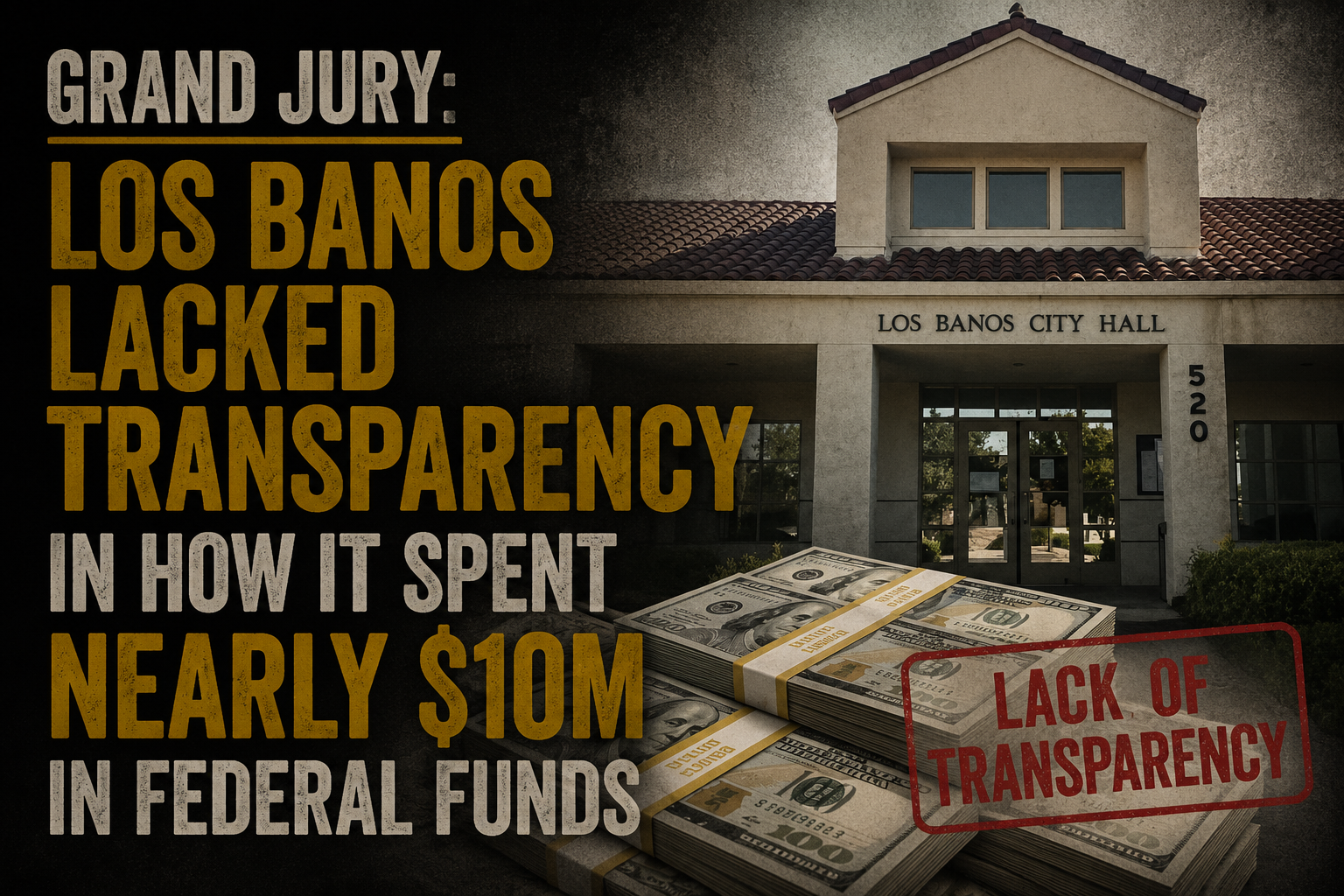
Why Is Los Banos Sitting on Millions While Residents Wait?
The City recently celebrated a budget of more than $165 million, highlighting a projected 10% surplus and reserves totaling roughly 30% of its budget. City leaders describe those reserves as a sign of financial strength. The question many residents should be asking is whether that strength is actually translating into a better city. Drive through Los Banos and the answer isn't obvious.
Residents continue to voice concerns about deteriorating roads, traffic congestion, limited entertainment options, a downtown that has struggled for years to become a true destination, insufficient pedestrian and bicycle infrastructure, and a shortage of the kinds of amenities found in similarly sized communities.
So why, with reserves approaching 30%, do so many of these needs remain works in progress?
No one is suggesting the City should spend recklessly or empty its savings account. Every city should maintain reserves for emergencies, economic downturns, and unforeseen expenses. But when reserve levels significantly exceed the minimum recommendations commonly cited by public finance organizations, taxpayers have every right to ask whether the balance has tipped too far toward saving and not far enough toward improving daily life.
Money sitting in reserve doesn't fill potholes. It doesn't revitalize downtown. It doesn't create new parks. It doesn't improve walkability. It doesn't attract restaurants, entertainment, or employers. It doesn't make Los Banos a place where more residents choose to spend their weekends instead of driving somewhere else.
If Los Banos is financially healthy enough to maintain a surplus after funding all of those priorities, why are residents still being told that so many quality-of-life improvements must wait?
Even more importantly, what is the long-term plan for these reserves? Is there a target at which the City says, "We've saved enough—it's time to invest more aggressively in our community"? Or is the goal simply to continue accumulating reserves because it's fiscally comfortable to do so? Those are questions taxpayers deserve answered.
Public trust isn't built by announcing large reserves. It's built by explaining, in detail, why those reserves need to be that large, what they're ultimately intended to accomplish, and when residents can expect to see those dollars transformed into tangible improvements. The issue isn't whether the money exists. The issue is whether the City's priorities reflect the needs of the people who generated it.
A History of Questionable Hires by the Los Banos School District

Porch Pirates in Los Banos
Prior to the rise of e-commerce, residents acquired goods through traditional means. They entered stores, selected merchandise, and transported it home personally. This system, while primitive by contemporary standards, had one significant advantage: strangers were generally unable to steal purchases that were already inside the owner's vehicle.
The emergence of online retail in the early twenty-first century fundamentally altered this relationship. Goods no longer traveled directly from merchant to consumer. Instead, they entered a transitional phase, often spending several hours exposed on front porches throughout the city.
Scholars of opportunity have long recognized that unattended valuables attract attention. Los Banos proved no exception.
As delivery volumes increased, a new cultural institution emerged. Residents received notifications informing them that a package had been delivered. Many interpreted this message not as a call to action, but as a pleasant fact to be acknowledged later.
Boxes accumulated on porches across the city. Some contained electronics. Others contained clothing. Many contained items so mundane that no reasonable person would want them. Yet uncertainty itself became the attraction. A sealed cardboard box offered possibility. It might contain a laptop. It might contain twelve rolls of paper towels. Until opened, both outcomes remained equally plausible. This uncertainty fueled what historians now recognize as the Porch Pirate Era.
The Porch Pirate occupies a unique place within the urban ecosystem. Unlike traditional criminals, who must often plan and coordinate their activities, the Porch Pirate relies primarily on timing and cardio. The species is most active during daylight hours and demonstrates remarkable sensitivity to delivery vehicles. Researchers have observed that a Porch Pirate can identify an Amazon package from distances exceeding several hundred feet, despite frequently being unable to identify gainful employment opportunities at much closer range.
Once a package is secured, the Porch Pirate retreats to a secondary location where the contents are evaluated. Historical evidence suggests that many thieves have experienced profound disappointment during this phase. Nevertheless, the practice continues. Today, package theft remains one of the region's most enduring traditions.
Residents continue to order merchandise online. Delivery drivers continue to leave boxes on porches. Porch Pirates continue to gamble their freedom for what is, statistically speaking, likely to be a household necessity purchased during a late-night sale. The cycle persists because each participant believes they are the rational actor. The buyer assumes nobody would steal a package. The thief assumes the package contains something valuable. Both are often wrong.

Maybe Don’t Leave Your Doors Always Open
Los Banos often describes itself as a welcoming community where doors are always open and neighbors can trust one another. However, that image is difficult to reconcile with the reality that many residents face when it comes to package theft. Despite the town’s claims of openness and community trust, stolen deliveries have become a persistent concern that undermines those very values. A neighborhood cannot truly be considered welcoming when residents feel the need to constantly monitor their front porches and worry that their purchases may disappear before they even get home.
The problem highlights a contradiction between Los Banos’ reputation and the experiences of many people who live there. While the city promotes an image of safety and neighborliness, the frequency of package theft suggests a lack of respect for personal property and a failure to deter opportunistic crime. Residents are often forced to take extra precautions, such as installing security cameras, tracking deliveries in real time, or arranging alternative pickup locations, simply to avoid becoming victims. These measures reflect a level of distrust that stands in direct opposition to the community’s self-described identity.
Package theft does more than create financial inconvenience; it contributes to a broader sense of insecurity. When people cannot trust that items delivered to their homes will remain there, confidence in the neighborhood begins to erode. The repeated occurrence of these incidents raises questions about how accurate the city’s welcoming image really is. If residents must constantly guard against theft, then the idea of a community built on openness becomes increasingly difficult to accept.
Ultimately, Los Banos’ reputation as a place with “doors always open” appears inconsistent with the experiences of those affected by package theft. The persistence of these crimes suggests that the city’s public image may be more aspirational than factual. Until residents can rely on their property being left untouched, claims of exceptional trust, safety, and hospitality will continue to be challenged by the realities occurring on neighborhood doorsteps.